



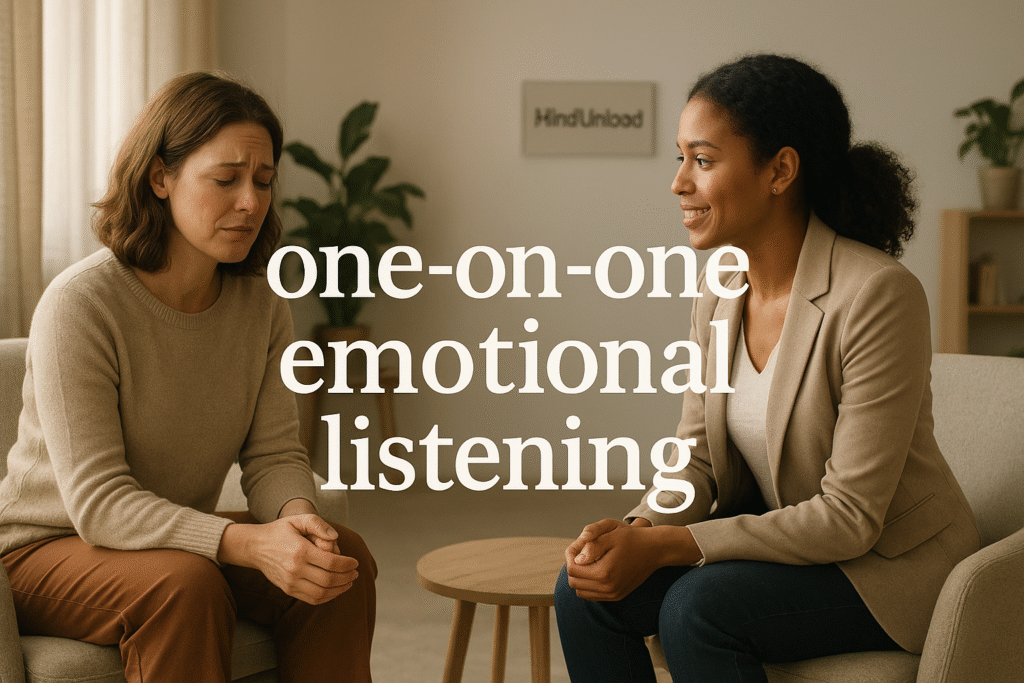
One-on-one emotional listening is a simple yet profound way to feel truly understood. In moments of stress or emotional overwhelm, having someone listen without judgment can bring unexpected relief and clarity. It’s more than just talking, it’s feeling safe enough to share the thoughts and emotions you usually keep hidden.Tools like an emotional expression app can help you organize your feelings, giving you a way to express what’s inside before speaking aloud. By reflecting on your emotions, you can better understand yourself and prepare for deeper conversations. Platform MindUnload provides a safe, supportive space where your emotions are heard and validated, helping you navigate life’s challenges with calm and confidence. With the right guidance and space to vent, healing becomes not just possible, but gentle and empowering.
Table of Contents
What is one-on-one emotional listening?
It means giving your full attention to one person’s emotional experience. It goes beyond simply hearing words; it is about sensing tone, facial expression, body language, and empathizing. The listener enters into the emotional space of the speaker, validating struggles, fears, hopes, without immediately trying to “fix” or judge.
A listener might say: “I hear that this is very painful for you. Tell me more.” They don’t rush to give advice. The goal is emotional presence: making the speaker feel heard and safe. This deep listening can shift the energy in a conversation from tension and confusion to clarity and connection.
This kind of listening helps reduce feelings of isolation, guilt, or confusion in the person speaking. Over time, it encourages healthier emotional habits and people feel safer to express their vulnerabilities, leading to deeper trust and better relationships (with self and others).
Why it matters in daily life
- Emotional regulation: When someone listens deeply, it gives the speaker space to vent and regulate intense feelings.
- Healing trauma or pain: Many emotional wounds come from not being heard; It helps reverse that.
- Strengthening relationships: Whether with friends, partners, or family, being heard fosters mutual trust.
- Preventing escalation: In conflicts, listening first can de-escalate tensions and prevent misinterpretations.
- Encouraging self-expression: When safe listening becomes a habit, people feel freer to express emotions earlier, avoiding emotional suppression.
Because of these benefits, many modern platforms and tools are supporting this approach. For example, MindUnload offers a safe, anonymous space for emotional expression through one-on-one listening by trained empathy advocates.
Role of an emotional expression app in supporting listening
- It provides channels (chat, voice, journaling) for people to begin expressing what’s inside before a conversation.
- It can connect users with listeners or empathy advocates as in mindunload.
- It offers prompts or guidance to help users clarify what they feel, which makes listening more focused and effective.
- It may support mood tracking or prompt revisiting past entries, helping both speaker and listener see patterns over time.
How to practice one-on-one emotional listening:
- Set intention: Before the conversation, decide to listen without judgment, interruption, or immediate advice.
- Create safety: Choose a private, quiet space. Let the speaker know they can speak freely, and that you won’t criticize or interrupt.
- Full presence: Make eye contact, lean slightly forward, nod, and keep your body open. Silence your inner commentary.
- Reflect and paraphrase: Occasionally repeat back what you heard, e.g. “You’re saying you feel overwhelmed by work.”
Pro Tips
- Use gentle silence
Sometimes silence gives the speaker space to go deeper. Resist filling every pause. - Name the unspoken
If the speaker pauses or seems stuck, you might gently say: “It feels like you want to say something but are holding back, do you want to?” - Observe body cues
Notice shifting posture, tears, tension in voice. You can say, “I notice your voice trembling, what’s going on there?” - Mirror emotional tone
Without mimicking, match the level of energy (softness, calm, urgency) to show attunement. - Avoid “but” statements
“I hear you, but …” often invalidates. Use “and” or reframe: “I hear you, and I’m wondering…” - Ask emotional vs factual questions
Instead of “What happened next?” ask, “How did that make you feel?” - Offer optional reflection
You may say, “If it’s okay, I’d like to reflect on something I heard back to you. Would you like that?” - Respect emotional pacing
If the speaker slows or retreats, allow space. Don’t push them to continue prematurely. - Self-check your feelings
Notice if you feel restless, defensive, or impatient. Pause, breathe, recommit to listening. - Follow up later
After the session, check in (“How are you doing now?”). This reinforces that you care beyond the moment.
FAQs
1. How can I tell if one-on-one emotional listening is working?
You’ll often see the speaker’s emotional tone shift less tension, deeper breath, more clarity. They may express things they couldn’t earlier. You feel a stronger connection. Over time, conflicts resolve more gently.
2. What is the difference between emotional listening and advice-giving?
Emotional listening prioritises being present, empathizing, validating feelings. Advice-giving aims to solve the problem. When you jump to advice, the speaker may feel unheard or judged. Listening first paves the way for more receptive suggestions later.
3. When should I use an emotional expression app?
Use it when you feel too anxious or scattered to directly share, or when you want to organize thoughts before talking. An emotional expression app can act as a “warm up” before a deeper conversation with a listener.
4. Can one-on-one emotional listening help in romantic relationships?
Yes. Many conflicts emerge because partners feel unheard. Using this regularly helps each partner feel emotional safety. Over time that builds trust, closeness, and reduces resentments.
5. What if I struggle to listen well?
That’s okay, all good listening skills take practice. Start small (5 minutes), use prompts, practice self-awareness (notice your urge to interrupt), and reflect on what you heard. Over time your capacity grows.
Conclusion
In summary, one-on-one emotional listening is a profound act of presence. It helps emotional regulation, fosters connection, and transforms how we relate to ourselves and others. An emotional expression app can support this by giving structure, privacy, and access to safe listeners (for example,mindunload provides one-on-one emotional support via empathy advocates)
We covered how to practice it step by step, offered 10 pro tips for deeper listening, and answered common questions. As you put these into action, you’ll likely notice more openness, safety, and healing in your conversations.
If you want to explore how to use the emotional expression app by Mind Unload in your own life, visit MindUnload.com and begin your journey toward more compassionate listening and emotional clarity.
