



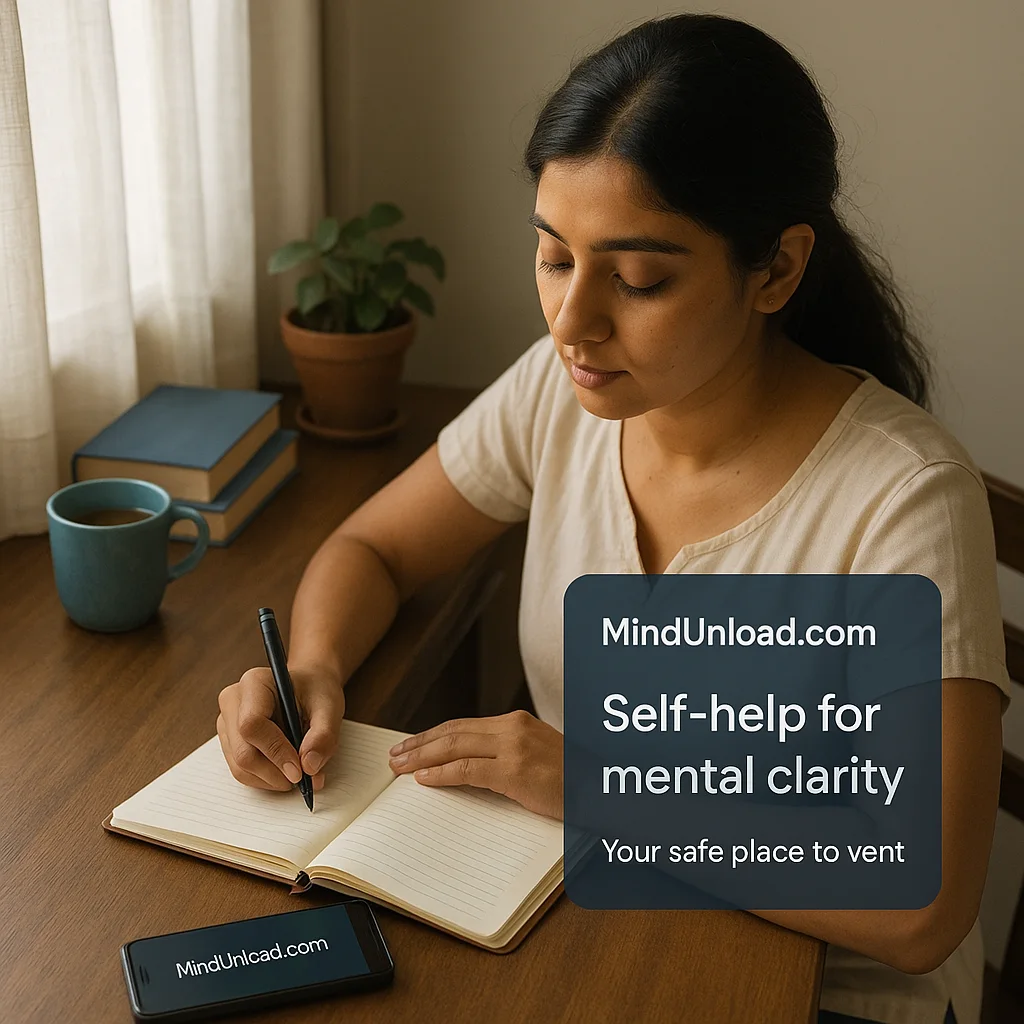
Self-help for mental clarity begins with one of the most natural actions: writing. When your mind feels heavy with emotions, stress, or overthinking, journaling becomes a powerful way to release the clutter and feel grounded again. It allows your thoughts to settle and your emotions to surface in a space that’s completely yours. Through MindUnload, journaling isn’t just about filling pages. It’s a guided experience that encourages emotional release, daily reflection, and a sense of calm using thoughtful prompts and personal tools.
Table of Contents
Why Writing Brings Mental Clarity
Thoughts move fast. Emotions build up. You might feel overwhelmed, anxious, or simply unsure why you’re not okay. Writing slows this down. It helps you break down big emotions into manageable pieces and gives your feelings a name.
When you journal, you begin to respond to your thoughts instead of reacting to them. Even five minutes of writing can offer:
- More peaceful thinking
- Better focus during the day
- Emotional release
- A deeper connection with yourself
This kind of clarity is why journaling works as a quiet but effective form of daily support.
Journaling as a Safe Place to Vent
Some days, talking to others feels too hard. You may not want advice. You just want to express yourself, without interruption or fear of being judged. Journaling gives you that safe place to vent.
On MindUnload, you get a structured yet private space where you can:
- Share your thoughts anonymously
- Use prompts to open up when you’re stuck
- Track emotions and patterns over time
Whether you’re dealing with daily stress or deep emotional weight, journaling becomes your personal outlet, a space that’s yours alone.
Morning or Evening? Both Have Power
There’s no perfect time to journal. What matters is consistency. Still, writing in the morning or evening has its unique strengths:
- Morning journaling helps you unload leftover thoughts from sleep, calm your nerves, and set a gentle tone for the day ahead.
- Evening journaling allows you to reflect, release the stress of the day, and create emotional closure before sleep.
Pair your journaling with small rituals to make it even more calming:
- Sit near a window or soft lamp
- Play gentle instrumental music
- Light a candle or drink warm water
These little actions help your mind associate journaling with emotional peace.
How Journaling Strengthens Self-Help for Mental Clarity
Here’s how journaling supports real self-help for mental clarity:
- Releases inner tension – You unload what’s weighing on your mind
- Organizes scattered thoughts – Emotions feel more sorted and less twisted
- Improves self-awareness – You better understand what affects your mood
- Reveals repeated patterns – Journaling shows what keeps coming up
- Builds emotional strength – With daily use, journaling makes you more strong
Whether you’re dealing with stress, confusion, or burnout, journaling gives your emotions a healthy space to exist, and pass.
Pro Tips for Better Journaling
Here are practical ways to turn journaling into a helpful daily habit:
- Free write for 5 minutes – Let the words flow without thinking
- Don’t edit or censor – Be honest, not perfect
- Use daily prompts from MindUnload.com when you feel stuck
- Stick to a routine time – Same hour each day builds consistency
- Add a calming ritual – Use light, sound, or scent to relax
- Journal before screen time – Avoid morning or bedtime distractions
- End with one peaceful thought – This helps close the entry positively
- Use a private notebook or secure digital tool
- Start small – Even three lines a day is progress
- Read old entries weekly – You’ll start to see emotional patterns and growth
FAQs
1. Why is journaling so powerful for self-help for mental clarity?
Because it gives your thoughts structure. When your mind is overloaded, writing them down creates space. You feel seen, even if it’s just by yourself. Tools at MindUnload.com make this even easier with gentle guidance and prompts.
2. How does a safe place to vent improve journaling results?
Having a safe place to vent encourages honesty without fear. When you know your thoughts are private, you’re more likely to open up fully. This leads to deeper emotional clarity and stronger mental relief. MindUnload.com offers exactly this kind of space, calm, private, and guided.
3. Can I journal when I feel numb or disconnected?
Yes. Writing “I feel nothing” is still helpful. It brings attention to your emotional state and sometimes leads to deeper insights. You don’t have to feel deeply to begin.
4. Is it fine to journal on a phone instead of a notebook?
Of course. Digital journaling is just as effective, especially when it’s secure and easy to access. MindUnload.com gives you a private space where your thoughts stay safe.
5. Do I need to journal every single day?
Not necessarily. Aim for consistency, but don’t be hard on yourself. Journaling three or four times a week still offers great benefits. The key is to return to the habit whenever you can.
Conclusion
Self-help for mental clarity doesn’t always require big changes. It often begins with small, honest words in a notebook or screen. Journaling gives you a daily place to breathe, reflect, and feel safe, especially on the days when your emotions feel too loud.
With MindUnload, journaling becomes more than a habit. It becomes a way to reconnect with yourself. Whether you’re overwhelmed, lost, or just emotionally tired, writing can help you find your calm again.So take a few minutes today. Sit in your quiet corner. Let your page become a safe place to vent. You don’t need the perfect words. You just need to begin.
