



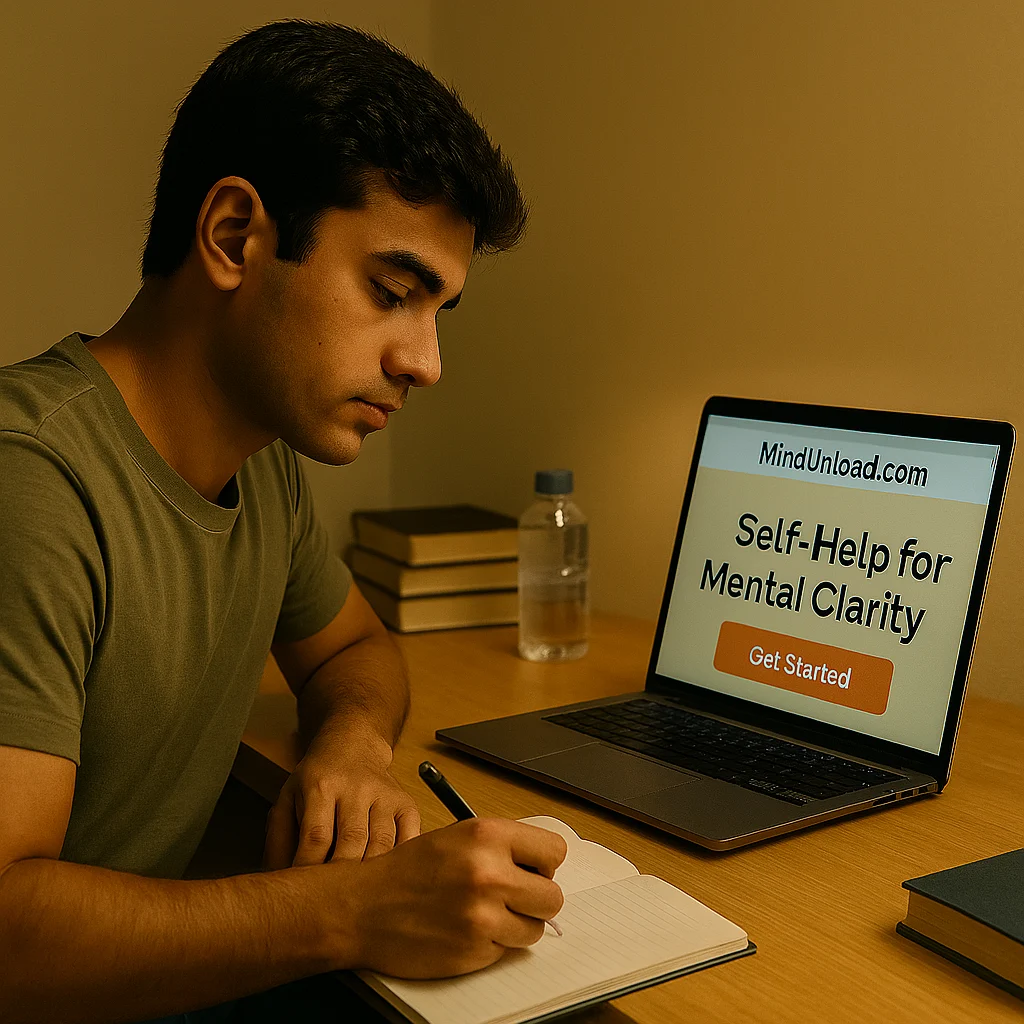
Self-help for mental clarity matters a lot during exams. When students are surrounded by books, assignments, and late-night study sessions, their minds can feel full, stressed, and confused. It’s not always about working harder, sometimes, it’s about staying calm, focused, and emotionally balanced.Thanks to platform MindUnload, students now have easy access to free emotional support. Whether it’s through guided journaling, reflective prompts, or talking to trained listeners called Empathy Advocates, these tools offer a safe outlet for emotional relief during high-pressure exam periods.
Table of Contents
Why Mental Clarity Matters During Exams
Exams are more than just tests of knowledge, they’re also tests of endurance, focus, and mental strength. The stress of revision, fear of failure, and academic pressure can leave students emotionally tired. This mental clutter makes it hard to retain information, maintain consistency, or think clearly under pressure.
Without mental clarity, students often experience:
- Brain fog and forgetfulness
- Low motivation and frequent delay
- Anxiety attacks or emotional shutdown
- Difficulty sleeping or concentrating
That’s why mental clarity is not a luxury, it’s essential. A calm mind learns better and performs with greater confidence.
The Role of Self-Help Therapy Tools
Not every student has access to formal therapy during exams. Some feel shy opening up, while others can’t afford it or don’t have the time. This is where self-help therapy tools become powerful.
Platform MindUnload offers practical tools that students can use on their own terms:
- Guided journaling to express and release overwhelming emotions
- Private reflection prompts to organize thoughts
- Anonymous chats with Empathy Advocates who listen without judging
These tools are flexible, supportive, and available anytime, perfect for late-night worries or early-morning stress.
How to Practice Self-Help for Mental Clarity During Exams
Here are simple ways students can use MindUnload’s tool to stay emotionally strong throughout their exam period:
- Start the day with honest journaling
Before touching your syllabus, write down how you feel. Empty your stress into the journal. - Use guided prompts
If you’re stuck, use a prompt like “Today I’m feeling…” or “What’s disturbing me right now?” - Pause to vent mid-study
If your mind feels heavy or distracted, open the app and write what’s disturbing you. Even a few lines help. - Speak to someone
Use the anonymous chat feature to share your thoughts with a trained listener. It’s safe and calming. - Reflect before sleeping
Nighttime thoughts can be the loudest. Write down one emotional win or frustration before bed.
This daily self-care takes just 10 to 15 minutes and makes studying more focused and less exhausting.
Pro Tips for Mental Clarity During Exams
- Use a journal daily – Write freely about your emotional state. You don’t need structure, just honesty.
- Don’t ignore the pressure – Acknowledge your stress instead of fighting it. Then release it through writing.
- Drink water every hour – Hydration improves memory and focus.
- Mute social apps while studying – Avoid digital noise and emotional comparison.
- Set a feeling goal – Not just what you want to study, but how you want to feel. Calm? Confident?
- Use calming prompts – Try “I’m grateful for…” or “I feel pressure from…” to release mental blocks.
- Celebrate small wins – Write down one task you completed, even if it’s small.
- Take 3 deep breaths every hour – Reset your nervous system.
- Keep study and sleep areas separate – Don’t revise in bed. Keep boundaries clear.
- Use the tool MindUnload.com – They’re always there when you need a silent reset.
Sample Daily Exam Routine Using MindUnload
Morning (10 mins):
Journal what you’re feeling before you begin studying. Set one emotional intention for the day.
Afternoon (5 mins):
Midway through your revision, pause and write about any mental block or anxiety.
Night (10 mins):
Reflect on what went well and what didn’t. Use a prompt to release any emotional burden before sleep.
Consistency in small self-help actions leads to bigger emotional resilience.
FAQs
1. How can I use self-help for mental clarity during exam pressure?
You can write your thoughts daily, use reflective prompts, and talk anonymously through MindUnload.com. These tools help reduce stress, create focus, and build emotional stability during exams.
2. What if I feel anxious but can’t explain why?
That’s common. Just begin by writing “I feel anxious but I don’t know why.” Let your thoughts follow naturally. MindUnload.com’s prompts are built to help students gently access their deeper feelings. Even confusion is a good place to begin, it’s honest.
3. I don’t like talking about emotions. What can I do instead?
You can use journaling and self-guided prompts instead. Writing is a quiet, private way to release emotional weight without speaking to anyone. Many students find that once they begin writing, it becomes easier over time.
4. Can self-help therapy really help with studying?
Yes. When your emotions are steady, your brain focuses better. Self-help therapy tools on MindUnload.com reduce internal distractions, clear emotional blocks, and prepare you to absorb and retain information more efficiently.
5. Is this only for people with serious problems?
No. Self-help tools are for everyone, not just those with diagnosed issues. During exams, even healthy minds feel pressure. MindUnload is made for any student who needs a pause, a release, or a boost in clarity.
Conclusion
In the exam season, emotional strength is just as important as academic knowledge. Self-help for mental clarity allows students to slow down, check in with themselves, and stay steady when everything feels overwhelming.
Platform MindUnload makes this support available, free, and judgement-free. No appointments, no labels, just tools built around effective self-help therapy techniques to feel better, think clearly, and keep going.
If you’re preparing for exams, give yourself the gift of emotional space. Reflect. Release. Refocus.
